Upconnect—AlumniNetwork
Category
Year
Stack
Universitas Pancasila had thousands of graduates, but no real way for them to find each other, access opportunities, or stay connected to the institution after graduation. The alumni data existed inside the university's academic system. It just had nowhere to go.
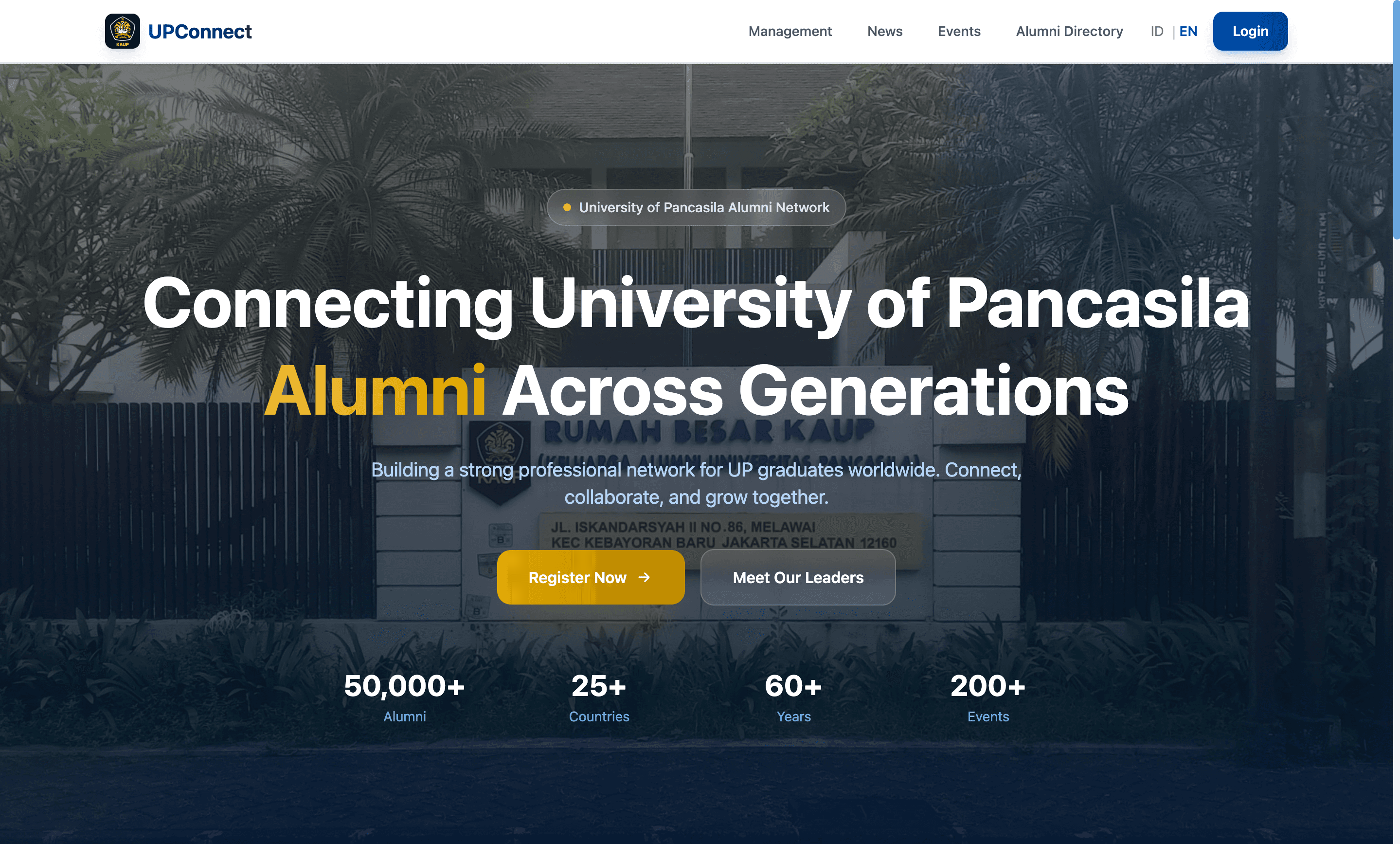
Upconnect is the platform that changed that. Alumni can build profiles, browse job postings, register for events, and reconnect with the university community.
But the university also had a separate Tracer Study platform with its own login. Alumni filling out a graduate survey had to create yet another account for a system they would use once. The fix was to make Upconnect the OAuth provider: one login, valid across both platforms. Alumni authenticate through Upconnect and move into Tracer Study without any friction. The survey completion rate went up. The extra account went away.
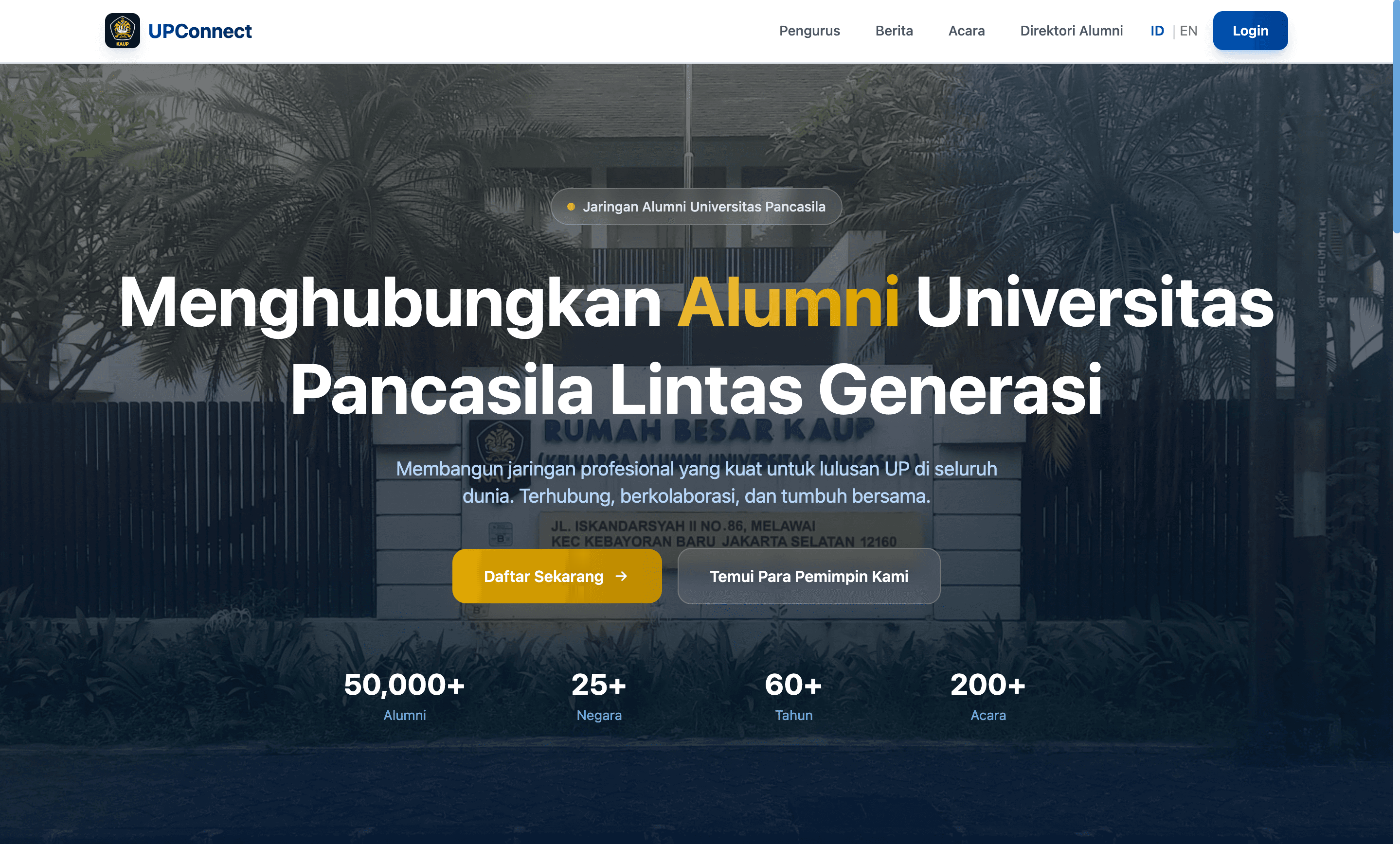
Landing page
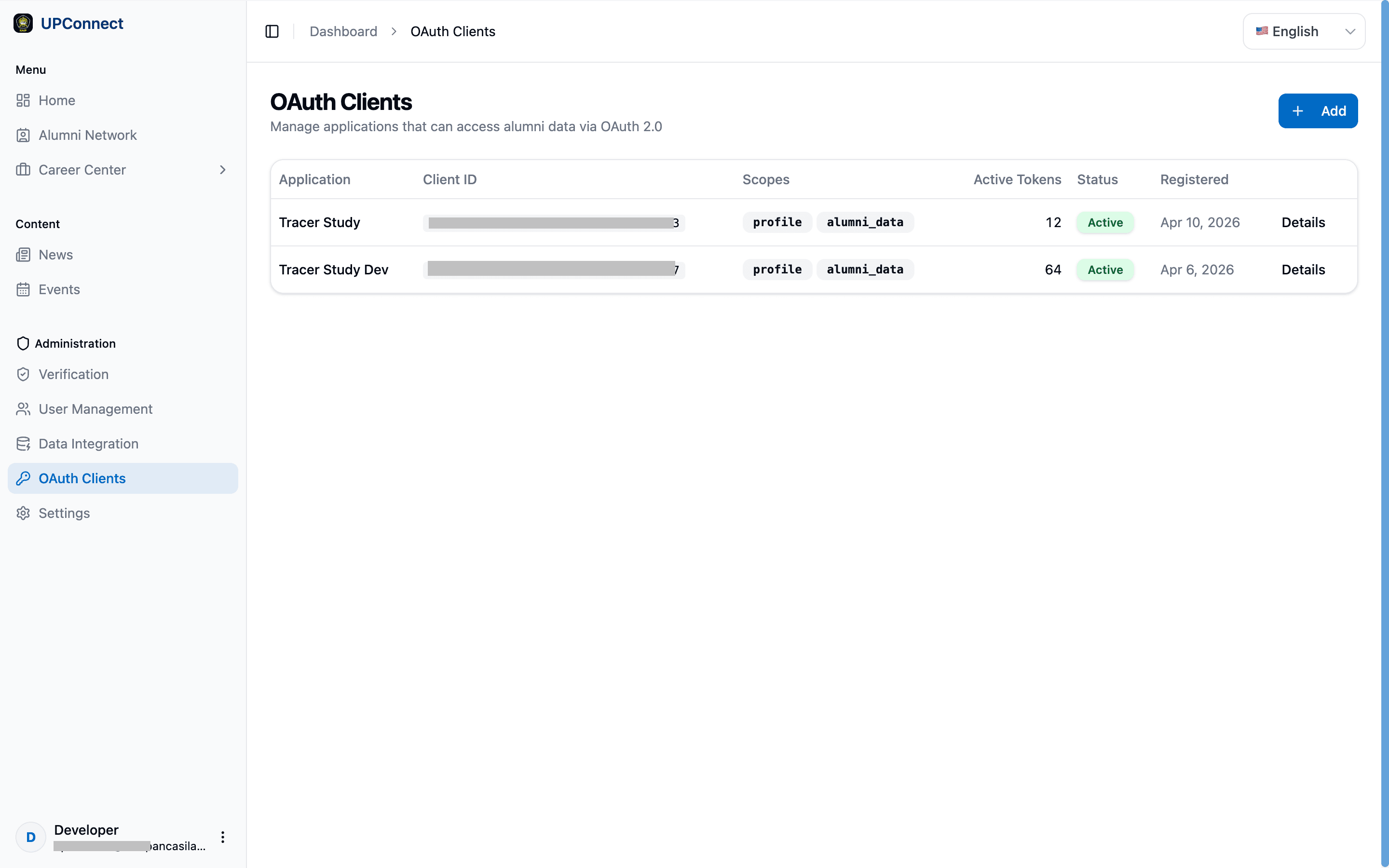
University SSO — one login across platforms
Building the alumni directory meant working with the university's internal academic system, which held 50,000+ student records. The problem was the data itself. Most records were incomplete, missing faculties, blank graduation years, inconsistent field formats. You cannot build a meaningful network on top of data you cannot trust.
The first real work was cleaning. Records without sufficient completeness were dropped, bringing the working dataset down to 27,000+ alumni. Smaller, but reliable. That distinction matters more than the bigger number.
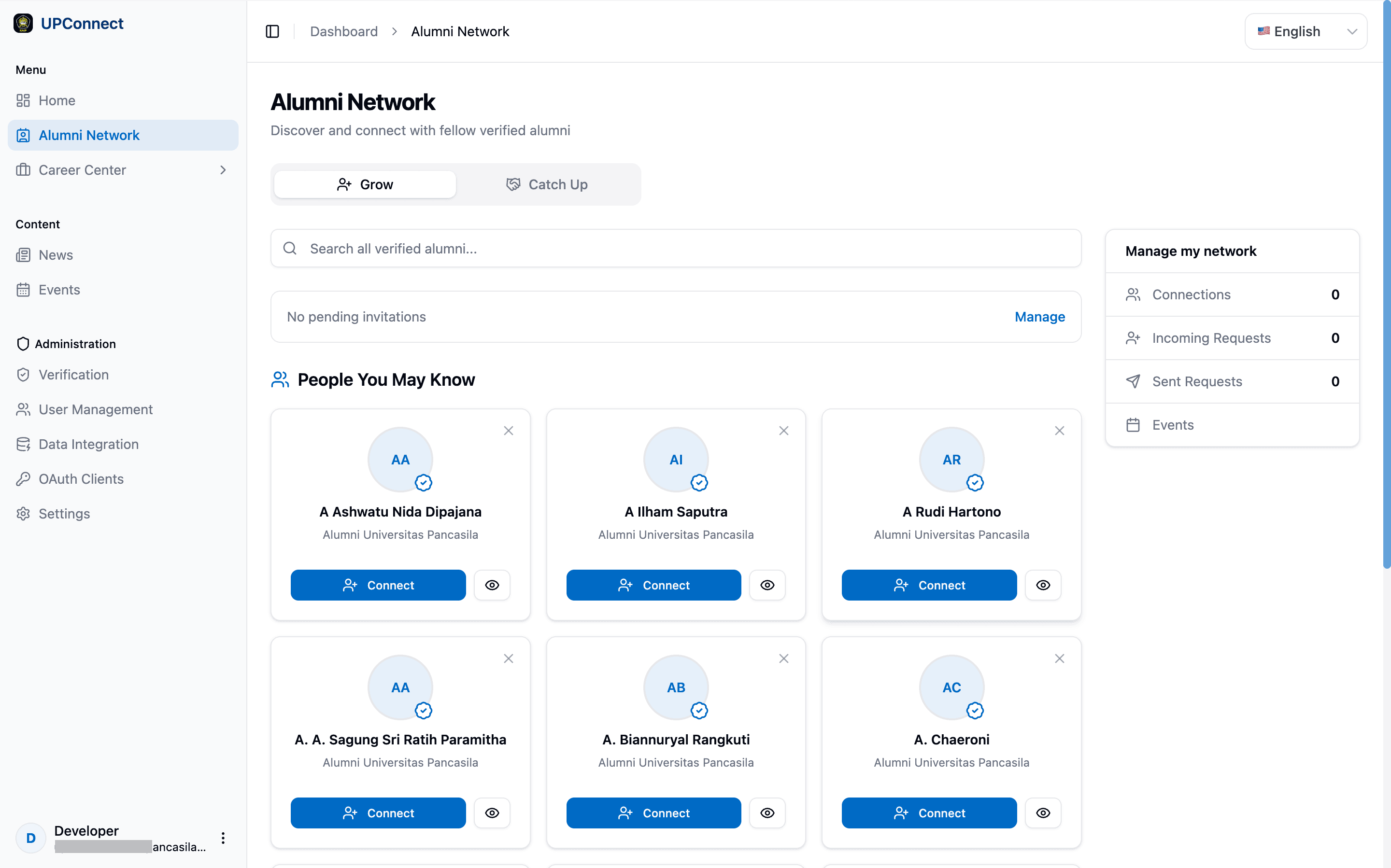
Alumni directory
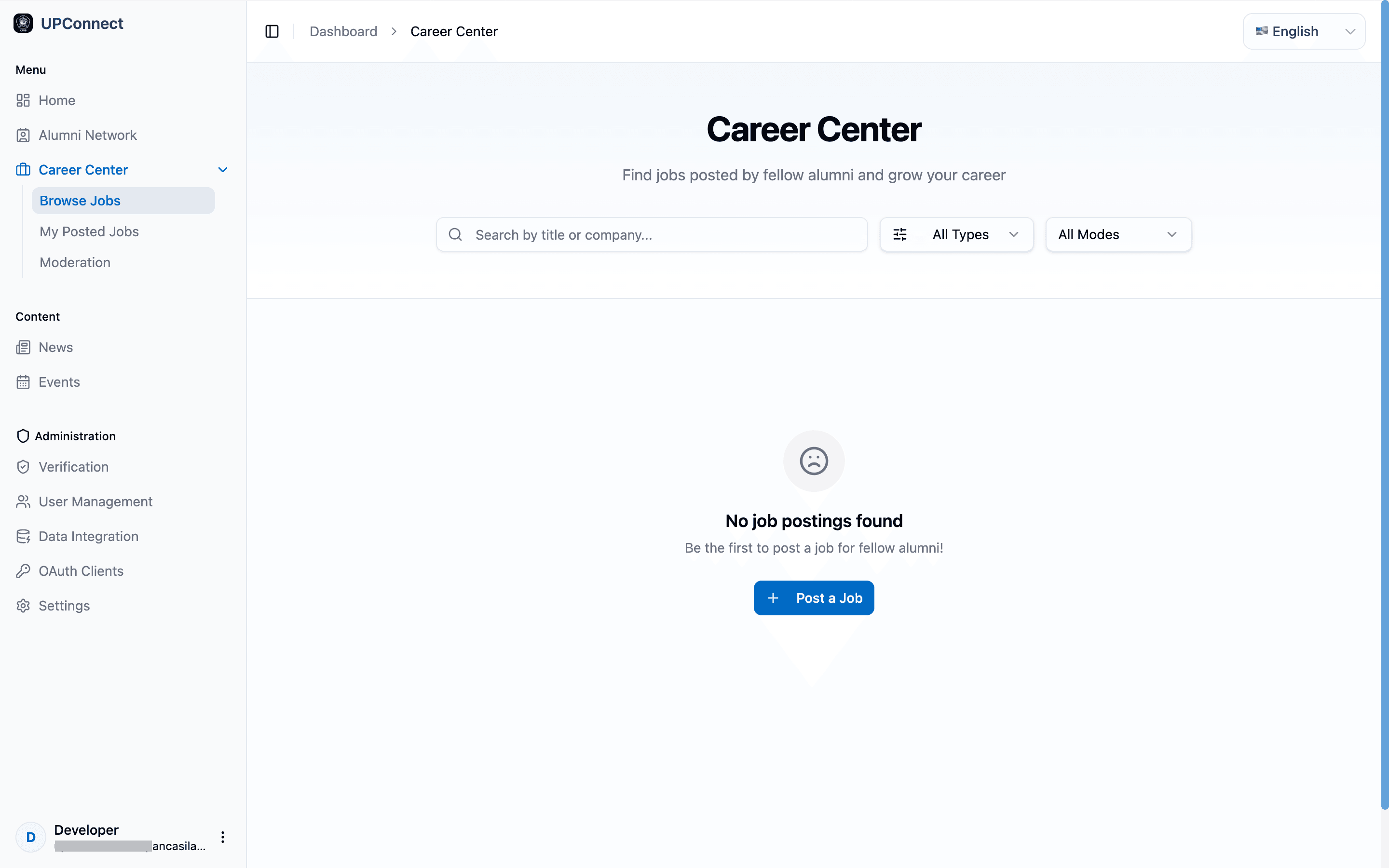
Career center and job board
Even with clean data, showing alumni a list of 27,000 names solves nothing. The problem shifted from data quality to relevance: how do you surface the right connections without asking people to search through strangers?
The answer was a Weighted Scoring system. Each connection suggestion is ranked by signals pulled from the cleaned dataset: faculty, major, graduation year, industry, and current role. Each factor carries a different weight based on how well it predicts a meaningful professional relationship. The result is a recommendation feed that feels personal, built on data that was worth building on.