SIAMI(AuditManagementSystem)
Category
Year
Stack
Universitas Pancasila has an accreditation cycle coming up. When the assessors arrive, they need to see audit data: complete, structured, and traceable across years. The problem was that none of that data was in one place. It was scattered across spreadsheets, shared folders, and email threads, with no consistent format and no history that anyone could actually present with confidence.
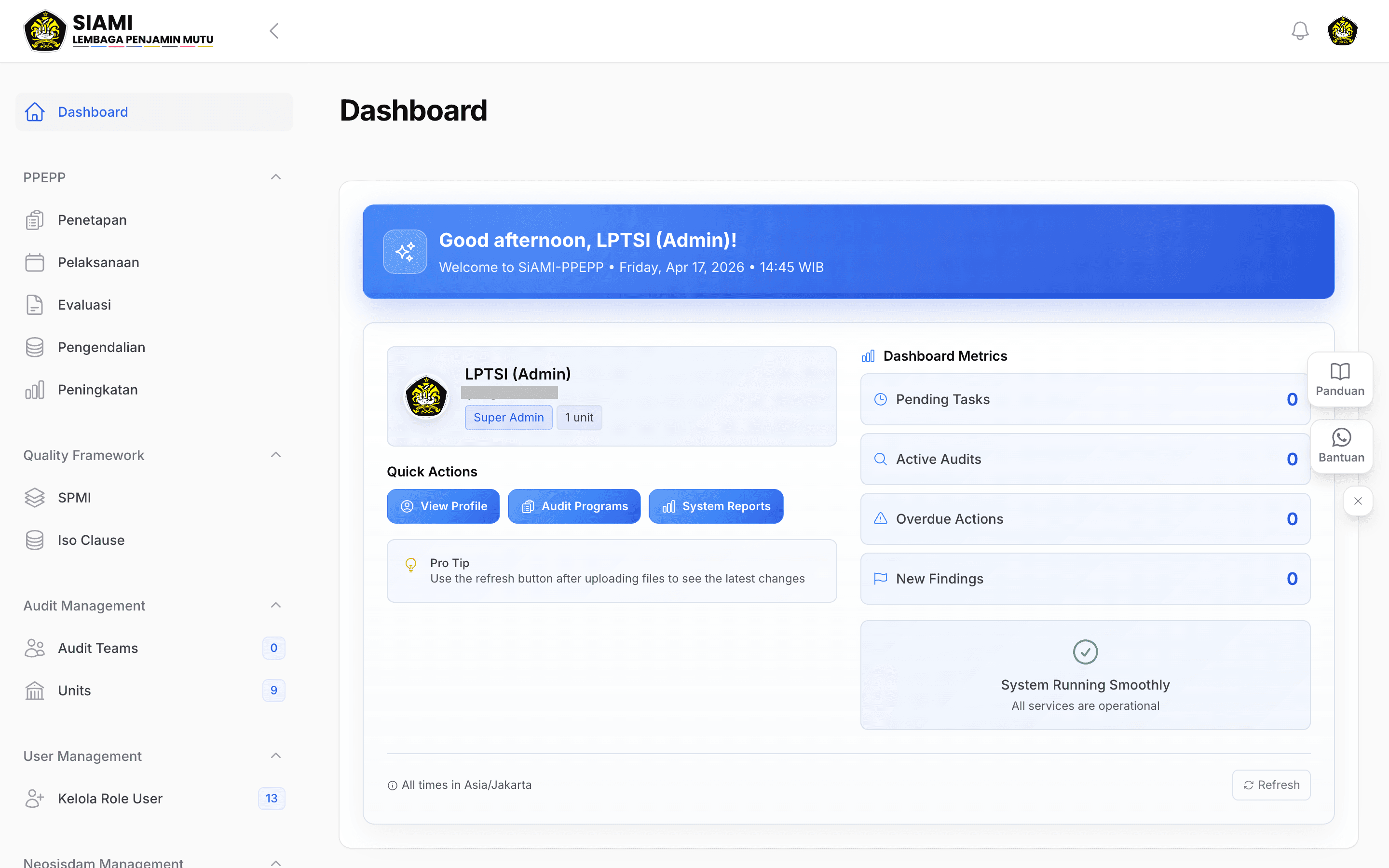
I was brought in to build the system before that day comes. SIAMI is the platform assessors will open when they need to evaluate the university's internal quality process. Everything in one place, with a full audit trail, structured by faculty, and accessible by role.
Main dashboard
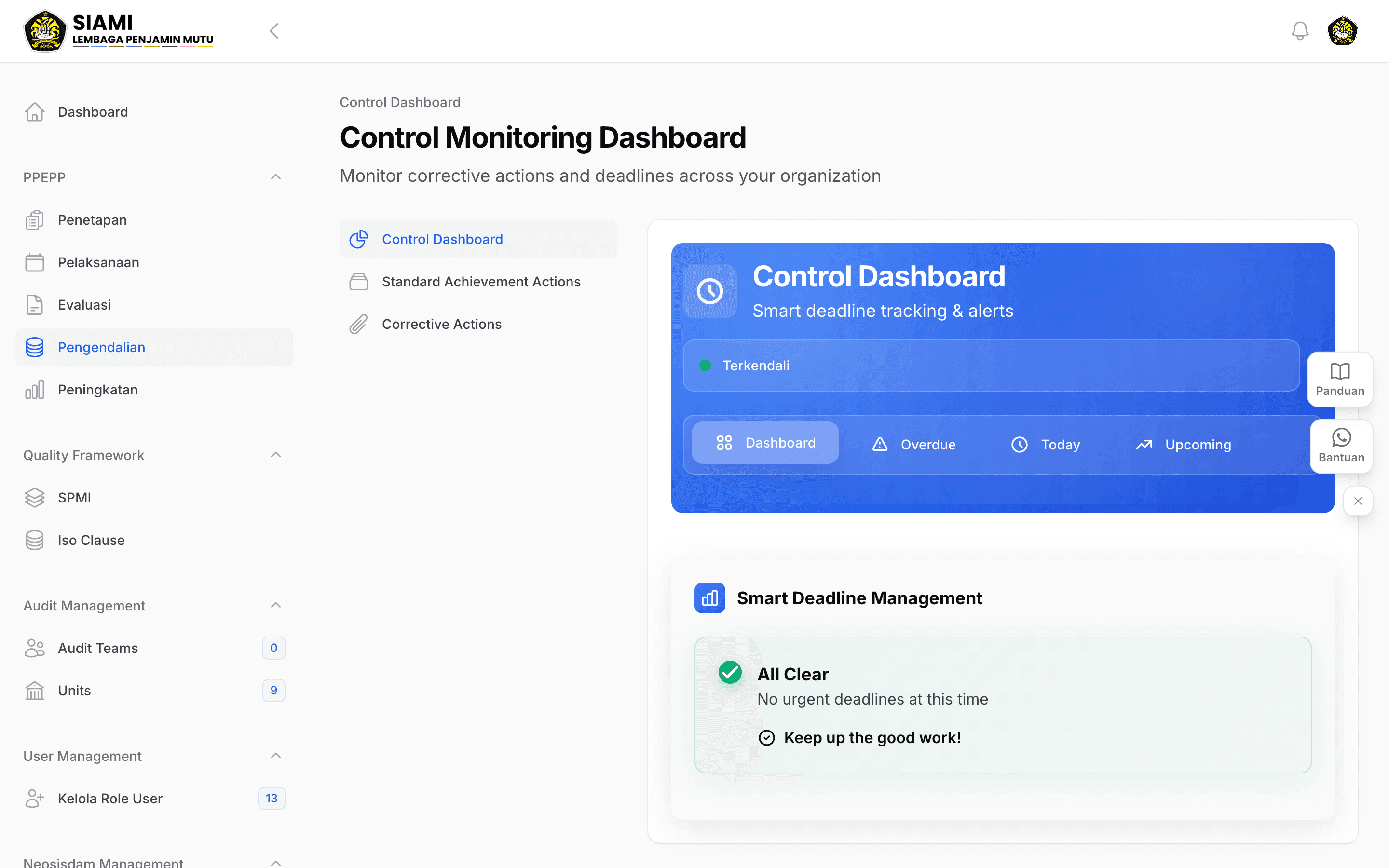
Real-time audit monitoring
One of the harder integration challenges was employee data. The audit workflows depend on knowing who is assigned to what, which faculty they belong to, and what role they hold in the process. The university had 1,100+ employee records sitting in a separate internal system with no direct connection to anything audit-related.
Integrating that data meant mapping it to the audit domain: pulling the right fields, resolving inconsistencies, and syncing it into SIAMI in a way that made role assignment and workflow routing actually work. Once the data was connected, assigning auditors to units and tracking accountability across the institution became something the system could handle automatically.
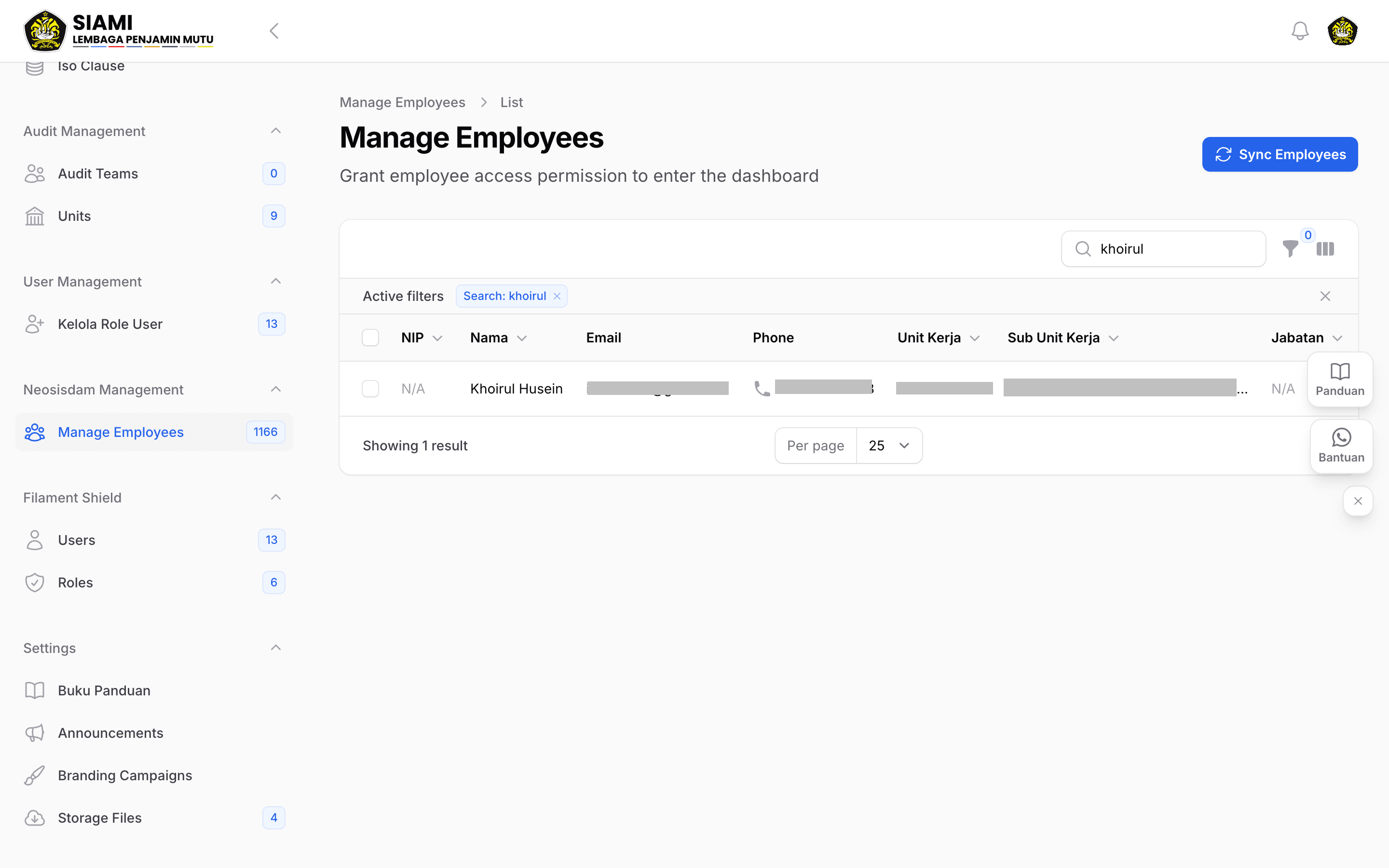
1,100+ employee records integrated
The system now handles the full audit lifecycle. Auditors submit findings through structured forms. Leadership monitors progress across every faculty in real time. Administrators manage access through role-based permissions that reflect the actual org structure. Nothing falls through email anymore.
What made this project genuinely difficult was not the technology. Laravel and Filament are well-understood tools. What was hard was translating 10+ stakeholder sessions into a system that matched how the institution actually works, not how a generic audit tool assumes it works.